OWNAFLEET
Managed equipment ownership · 2026
Equipment ownership, simplified

Heavy equipment
that pays you.

Own a real, cash-flowing fleet, eligible for 100% first-year bonus depreciation.

Own and run a real, cash-flowing equipment fleet, with a major publicly-traded U.S. rental operator supplying the execution layer so you never build a rental yard.

Presented by Cochran Capital
01 / 22
Who This Is For

Two kinds of buyers, one program.

Most participants come through one of two doors, diversifying a windfall into a tax-advantaged real asset, or offsetting a strong income year. The program is structured for both.

Diversifying a windfall.
Capital gain · business sale · inheritance · strong investment year

You've had a liquidity event and you're looking for something real, a fleet that pays you, isn't correlated to public markets, and comes with a platform that supplies the operating infrastructure instead of making you build it.

The full equipment purchase also typically qualifies for 100% year-one bonus depreciation, so your windfall deploys into a real asset and reduces same-year taxable income in one move.

Offsetting a high-income year.
Active business income · W-2 windfall · K-1 from a strong year

You have material active income this year, from a business, equity comp, or a particularly strong K-1, and you're looking for an asset that legitimately reduces taxable income through 100% year-one bonus depreciation.

The equipment qualifies. Whether you qualify depends on at-risk basis, material participation, and your specific situation. Your CPA needs to validate the fit.

The Opportunity

Three returns from one fleet.

A fleet across earthmoving, aerial, and material handling generates monthly rental income, typically qualifies for 100% year-one bonus depreciation, and holds residual value as hard collateral. Our platform supplies the operating infrastructure, so you can own and run the business without standing up a rental yard.

01
Monthly rental income
Equipment generates revenue from day one. After debt service, monthly distributions to your LLC typically run 6–8% on your initial cash outlay each year, modest by design, since rental income paying down the loan builds your equity in the equipment.
02
100% year-one bonus depreciation
The full equipment purchase typically qualifies for 100% bonus depreciation in year one under current federal tax law, applied directly against your active income. For most participants, this is the largest single piece of total economics. Your CPA confirms fit for your specific situation.
03
Real, mobile collateral
Durable, dollar-priced industrial assets serving national infrastructure spend. A limited-loss guarantee from the operator provides a floor on residual risk at exit.
Example Economics

What a $1M deal looks like.

Representative figures using the program's published pro forma assumptions. Your specific deal will vary, minimums, pricing, and fit are flexible through our partner relationships.

Equipment Purchase
$1,000,000
Representative example · pre-tax figures
Average fleet purchase: $1.2M · Typical minimum: $500K
Smaller deals may be possible earlier in the year. Q4 peak demand may push the minimum to $1M, or fleet may be unavailable entirely.

Assumptions

  • Down payment10%
  • Platform fee3%
  • Financed90%
  • Term6 years
  • Combined marginal rate40%
  • Bonus depreciation100%
Initial Cash Outlay
$130,000
10% down + 3% platform fee
Annual Cash Flow · Yr 1–5
~$9,100
After debt service, loan paydown dominates years 1–5
Year 6 Exit
~$109,000
Final cash flow + recovery at fair market sale, after loan payoff
Total Cash · 6-Year
~$155,000
Pre-tax cash-on-cash returned
Est. Year-1 Tax Impact
~$400,000
100% bonus depreciation × 40% combined marginal rate (37% top federal + ~3% representative state) · CPA-verified for your situation
Total Economics
~$555,000
Cash returned + estimated year-1 tax impact
The Leverage Play

What the tax savings unlock.

The year-one tax benefit doesn't sit idle. Redeploy it annually into tax-advantaged real estate or asset-backed yield strategies, and the equipment program becomes a multi-year tax engine for your broader portfolio. Clients working through Cochran Capital can integrate this directly with our real estate platform. An illustrative scenario on $1M of equipment, repeated each year of a 6-year contract:

01
Year-one net free capital.
~$270K
per $1M deal
$400K year-one tax benefit minus $130K cash outlay leaves ~$270K of net new capital, capital you wouldn't otherwise have, available the same tax year you deploy.
02
Run it every year.
6 years
contract horizon
Each year's equipment deal generates a fresh ~$270K of net new capital. Over the 6-year contract horizon, ~$1.6M flows into your broader portfolio, separate from the equipment program's own cash flow.
03
Compounded at 16%.
~$2.4M
6-year value
$270K invested annually at an illustrative 16% blended return, a historical range for tax-advantaged real estate strategies, compounds to ~$2.4M by year 6, separate from anything the equipment itself generates.
Illustrative scenario only. The 16% figure is a historical range for tax-advantaged real estate strategies, not a projection or guarantee. Real estate carries different risks than equipment ownership. Cochran Capital can scope redeployment paths, or work with your own advisors. Consult your CPA.
The Long Game

What if you kept that money every year?

Take the roughly $200K a year you would have sent to the IRS and put it to work instead. These figures are net of the tax due on each 6-year equipment buyback. Compounded over a career, the gap is generational.

$200K/yr reinvested at 16% / yr at 22% / yr at 28% / yr
After 10 years $3.9M $5.3M $7.2M
After 15 years $9.3M $15.5M $26.0M
After 20 years $20.6M $43.1M $90.7M

Assumes $200,000 contributed at each year-end and compounded at the stated hypothetical annual return (future value of an annuity), less an assumed tax payment of ~$200K at the end of years 6, 12, and 18 (tax on each ~$540K equipment buyback at a 37% rate). Purely illustrative rates, not a projection of program returns and not guaranteed. Actual results and tax rates vary. Your CPA confirms the tax side.

Year-by-Year

Where the cash actually flows.

The same $1M example, broken down by year. This is the working math behind the $9,118 in years 1–5 and the $109,118 in year 6, same assumptions as the previous slide.

Y0 Y1 Y2 Y3 Y4 Y5 Y6 Total
Initial outlay −$130,000 −$130,000
Operating revenue $162,500 $162,500 $162,500 $162,500 $162,500 $162,500 $975,000
Operating expenses −$29,400 −$29,400 −$29,400 −$29,400 −$29,400 −$29,400 −$176,400
Net operating CF $133,100 $133,100 $133,100 $133,100 $133,100 $133,100 $798,600
Debt service (P&I) −$123,982 −$123,982 −$123,982 −$123,982 −$123,982 −$123,982 −$743,892
Balloon + sale, net +$100,000 +$100,000
Participant cash −$130,000 $9,118 $9,118 $9,118 $9,118 $9,118 $109,118 $24,708
Reading the table. Operating revenue is your equipment's share of rental income. Expenses cover the 2.94% annual program fee plus maintenance and insurance. Debt service is P&I on the 90% loan. Year-6 "balloon + sale, net" is the equipment disposition (+$543,932) less the loan balloon (−$443,932). Total cash returned is modest by design, the headline economics come from the year-one tax overlay on slide 6, which is not modeled here.
Economics, Assumptions

The numbers behind the numbers.

The operator's Q2 2026 pro forma assumptions behind this illustration. Cash flow projections in slide 7 are built directly on these assumptions; your lender's current quote and executed note control the financing terms for your specific deal.

Program assumptions
  • Avg revenue share to monthly target80%
  • Agreement term72 months
  • Extension option at termYes
  • Baseline example$1M equipment
  • Utilization basis3-yr avg
  • Start dateFull 12 mo
Financing assumptions
  • Loan-to-cost90% + 1.25% fee
  • Down payment10%
  • Term72 months
  • Amortization120 months
  • Interest rate6.75%
  • Year-6 sale basisNOLV*
*NOLV, Net Orderly Liquidation Value. The fair sale price expected in normal markets over a reasonable selling period. Typically below retail fair-market value; this is the operator's standard year-6 buy-back basis.
Tax assumptions
  • In the cash projectionNone
  • Bonus depreciation100% (yr 1)
  • Tax overlayYour CPA
Cash and tax economics are modeled separately so you can see each piece on its own. The tax overlay is the largest piece of total economics for most participants, your CPA scopes it against your specific situation.
Economics, Revenue

What the operator pays you, and charges.

The two recurring numbers behind the cash-flow line: how rental revenue is split with you each month, and what the asset manager bills you each year to keep the equipment running.

Owner's revenue share
75–85%
Adjusted quarterly for seasonality.
Rates are higher in peak rental quarters (~85% in Q1 and Q4) and lower in softer quarters (~75% in Q2 and Q3), each up to a quarterly cap. The blended annual average lands near 80%.
Annual program fee
2.94%
The fee that buys the infrastructure.
For one annual line item, 2.94% of purchase price, the execution layer is covered. Maintenance, repairs, insurance coordination, telematics, and the asset-management platform, all delivered by the partner team as a vendor to your business. Flat, predictable, and a known cost instead of a variable one.
Downside Protection

When the floor catches you.

The single most common pre-call question: what if my equipment is worth less than expected at exit? Here's how the operator's limited-loss guarantee works in dollars, across three exit scenarios on a $1M deal.

Scenario Purchase Illustrated floor (54%) Sale price Shortfall Operator pays Owner net loss
Projected exit $1,000,000 $540,000 $552,000 $0 $0 $0
Soft market $1,000,000 $540,000 $480,000 $60,000 $60,000 $0
Severe downturn $1,000,000 $540,000 $400,000 $140,000 $99,900 $40,100
How the guarantee works. The operator makes an offer 180+ days before contract end, typically at NOLV (Net Orderly Liquidation Value). You can accept, or remarket to a third party. This Q2 2026 illustration uses a floor near 54% of original purchase price; actual limited-loss terms are set per equipment tranche, and your executed Limited Loss Guaranty Addendum and equipment schedule control. The operator pays the lesser of the shortfall below the applicable floor or 9.99% of original purchase price. This is limited downside protection, not a guaranteed sale price, return, or loan payoff.
The thesis

Your fleet. Your business.
Our platform.

Real, cash-flowing equipment titled in your name, and an equipment business you own and direct. The platform puts a major publicly-traded U.S. rental operator inside that business so you get national scale without building it. The ownership decisions stay yours.

Built on real scale

Backed by a publicly-traded rental operator.

Your equipment is owned, titled, and operated alongside the same fleet that powers one of the largest rental networks in the country. The operator's incentives are directly aligned with yours: they earn a share of the rental revenue your assets generate.

Operator
Publicly-traded
SEC-audited financials, public filings, and a national footprint. Operator name, ticker, and SEC EDGAR links shared on the intro call so you can verify independently.
Footprint
National rental network
Branches across the country, equipment redeployed by the operator to chase demand. Participant-owned units are treated identically to the operator's balance-sheet fleet.
Technology
Telematics on every asset
Real-time location, utilization, and revenue tracking for each piece of equipment you own. You can see what your fleet is doing, when.
Scale
$4B+ · 1,000+ participants
Over $4B in equipment has been placed through the managed-ownership program, across more than 1,000 active participants. An established, mature channel, not a pilot.
Diligence
Independent reports
Independent accountant reports specific to the program are available on request. The same documents the operator shares with institutional buyers.
Protection
Limited-loss guarantee
The operator backstops up to 9.99% of original purchase price if equipment sells below its stated floor at end of term, a real floor on residual risk.
The Fleet

Three categories. One platform.

Participant-owned equipment sits inside the operator's national rental network, same fleet, same software, same demand.

01
Earthmoving
Site prep · Infrastructure
  • Dozers
  • Excavators
  • Skid steers
The largest category by dollar volume. Steady demand from highway, utility, and commercial construction.
02
Aerial
Vertical access · Maintenance
  • Scissor lifts
  • Telescopic booms
  • Articulating booms
High utilization across data centers, warehouses, and commercial maintenance, work that doesn't stop with the construction cycle.
03
Material Handling
Logistics · Yard operations
  • Forklifts
  • Telehandlers
Workhorses of the rental yard, short rental cycles, broad customer base, indispensable to construction sites and distribution.
How It Works

Five steps. One signature.

From signed agreement to first rental check, onboarding is built to move fast. The partner team stands up the execution layer while you make the ownership decisions: what to buy, how to finance it, how to insure it, and where your floor price sits.

01
You buy
Through your LLC. The partner team arranges the equipment purchase and 90% lender financing. Typical first deal: $500K–$1M.
02
We manage
Fleet enrollment, insurance, maintenance, and telematics, all coordinated by the partner team.
03
It rents
Your equipment joins the operator's national rental network. Branch operators are agnostic to who owns each unit.
04
You get paid
Monthly net revenue distributions to your LLC. Telematics software shows location, utilization, and revenue per asset.
05
Exit at year 6
The operating partner offers fair market value, or you remarket. A limited-loss guarantee provides a downside floor.
Deal Structure

What you sign. What gets put in place.

Three counterparties, three agreements, one outcome, you own specific equipment and receive monthly net revenue distributions to your LLC's operating account.

01
Participant entity.
  • Typically a single-member LLC you own
  • Holds sole title to specific equipment
  • Receives monthly net revenue share to operating account
  • Makes the decisions an owner makes on their own equipment
02
Agreements in place.
  • Asset Management Agreement with the asset manager
  • Remarketing Agreement with the operator to support year-6 exit
  • Limited-Loss Guaranty up to 9.99% of purchase price
  • Telematics on every asset; insurance, repairs, and maintenance coordinated by the asset manager
03
Financing terms.
  • 90% financed through the lending partner
  • 10% down at signing + 3% platform fee
  • Fixed rate up to 7.25%, 72-mo balloon / 120-mo amort
  • Unlimited personal guarantee from LLC owners (standard for commercial equipment financing)
  • Operating account typically held at the lending bank
Ownership

The decisions that stay yours.

The platform runs the execution layer. It does not make the ownership calls. These are yours, they are written into your agreement, and they are the substance of running this business.

— 01
Your floor price.
You set the monthly floor beneath which your equipment will not be sold, and you revisit it as the market moves.
— 02
Your exit.
At end of term you elect to extend, to remarket, or to take the equipment back. That election is yours and it runs on a notice deadline.
— 03
Your insurance.
You carry the required coverage, choose your carrier or use the master policy, handle renewals, and decide how claims get pursued.
— 04
Your tax and licensing.
Property tax, licenses, and registration are the owner's obligation under the agreement. You file them, or you direct who does.
— 05
Your invoices.
Maintenance and service are billed as incurred. You review, approve, or dispute what gets charged against your equipment.
— 06
Your capital.
What to buy, how much of it, how to finance it, what you personally guarantee, and which documents you sign or send back redlined.
You own the business. You make the calls.
What the platform controls: the operator sets rental rates and selects customers at its own discretion, and runs the branch, technician, and logistics network. What that division of authority means for your taxes is your CPA's determination on your facts, not ours.
Through Cochran Capital

Same program. Same economics. Better access.

Our referral fee is paid by the operating partner, not added to your deal. You pay the same as going direct, and get an advocate inside the door who already knows the program from the participant's side.

01
Flexibility on minimums.
$500K is a typical starting fleet, and smaller deals are possible depending on timing. We work the flexibility based on your situation.
02
Single point of contact.
One relationship through closing, from first conversation to wire instructions to first rental check. No bouncing between operator, lender, and fleet manager.
03
Aligned incentives.
Josh participates in the program himself and works directly with the operations team, helping refine the participant experience. He's compensated on completed deals, at no additional cost to you, meaning our incentives point in the same direction as yours.
04
Integrated platform.
Equipment ownership fits inside Cochran Capital's broader tax-advantaged platform, opportunity-zone real estate, asset-backed yield, and infrastructure. Use the tax savings here to fund the next allocation.
Participant Story
The numbers were straightforward, the process was clean, and the year-one tax impact made a real difference for us, the kind of outcome you actually feel.
Dr. Jeremiah Sturgill
Orthodontist · Tennessee · Program Participant
Estimated Year-1 Tax Impact
~$350K
On a single equipment purchase, before any of the standard cash returns from the asset itself.
Why It Worked
100% bonus depreciation
Year-one deduction against active income, fully scoped and verified by his CPA before signing.
From Josh

Why we built this.

I've been investing in real estate and asset-backed yield through Cochran Capital for years. When I found this program, I made the equipment purchase myself, the math worked, the operator was credible, and the structure was cleaner than anything else I'd seen in the asset-backed space.

I built OwnaFleet to give individual buyers access to a program that's structured around institutional-size participants. The minimums and the process are designed around larger buyers, most individuals never get a clean door in. Through our partner relationships, we open that door, advocate for you through closing, and integrate the outcome with the rest of what we do at Cochran Capital.
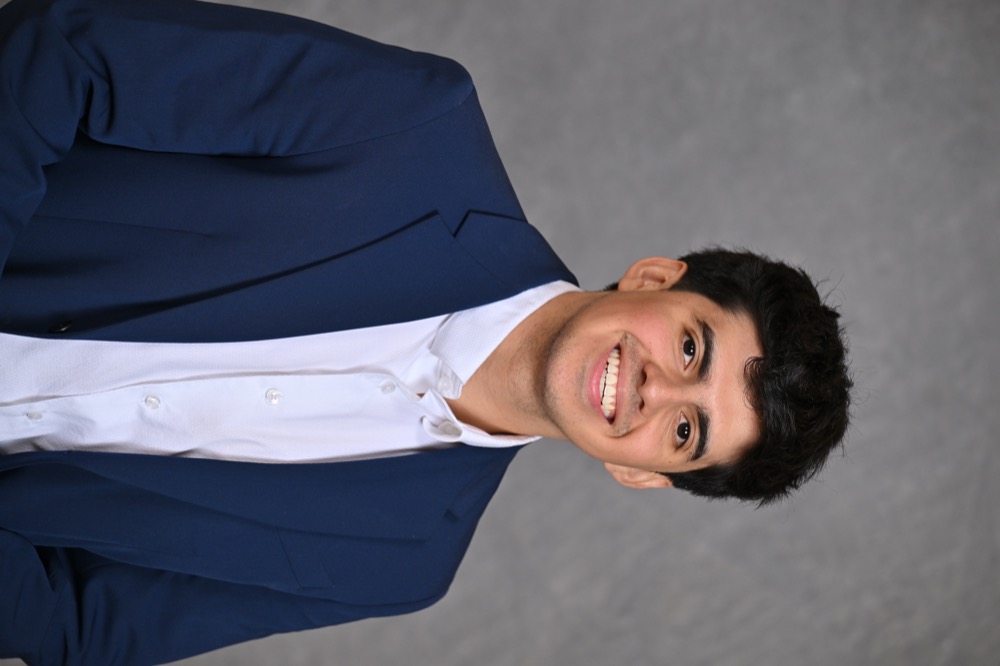
The intro call is the next step. There's no script, bring your questions, your tax situation, and what you're trying to accomplish. We'll figure out together whether this fits.

Josh Cochran
Founder · Cochran Capital · Dover, DE
Frequently Asked

Common questions.

Who actually owns the equipment?
You do, through your LLC. You hold sole title to specific serial numbers. This is a managed-ownership program, not a fund interest and not a security. The equipment does not appear on the operator's balance sheet.
What if my equipment doesn't get rented enough?
Revenue is collected at the pool level and distributed by formula, so an idle unit does not penalize you individually. The operator's national footprint redeploys underutilized equipment to follow demand. The program has historically met its monthly payout target.
Is there built-in equity in the equipment from day one?
Yes. The operator purchases at wholesale as one of the country's largest new-equipment buyers; participants typically acquire equipment at 10–12% below fair-market value. That cushion is part of why lenders extend 90% financing, and it's one of three layers protecting residual value at exit, alongside the limited-loss guarantee and the option to extend the term.
Can I actually use the depreciation? What are the gotchas?
Several things have to line up, and every one of them is your CPA's call on your facts: (1) income the deduction can offset, whether that is active income or passive income from other activities; (2) how the activity is characterised under the passive-activity rules, which is a genuinely unsettled area and where some clients obtain independent tax counsel; (3) at-risk basis, which the personally-guaranteed financing is intended to supply. We do not take a position on any of these for you.
What about the personal guarantee?
Required by the lender on the financed portion of the equipment, standard for commercial equipment financing. The guarantee also activates the full depreciation deduction by satisfying the IRS at-risk rules. Lender underwriting requires approximately 3× net worth and 30% liquidity relative to the purchase amount.
What is the rebuy rate at end of term?
Approximately 93–94%. Most participants roll into a new tranche or extend the term rather than fully exit, because exiting triggers depreciation recapture (treated as ordinary income). The tax math typically favors continued deferral.
What is the biggest single risk?
Counterparty concentration. The program's economics flow through one publicly-traded operating partner. Mitigants include SEC-audited financials, public regulatory filings, the equipment being your titled asset (not the operator's), and the option to remarket through a different channel in an adverse scenario. Worth diligencing with your CPA and counsel.
How long does the whole process take?
Approximately 4–6 weeks from completion of the lender's credit application to presentation of final terms. After signing, the first rental revenue and the first debt service hit your operating account together, typically within an additional 4–6 weeks. Q4 queues run longer; earlier in the year is materially faster.
Next Steps

Three steps to get started.

No obligation, no hard pitch. The path is designed so you can step in at any point and step out at any point, until you actually sign.

— 01
Schedule a 20-minute call
Walk through the program on a 20-minute call with Claudio.
Book a Call
— 02
Complete the credit application
With the lending partner, no commitment, no fees. Confirms your qualification before any documents are drafted.
— 03
Receive your deal structure
For review before signing. Specific equipment, financing terms, and agreement set, your CPA can weigh in.
Questions?
josh@ownafleet.com
Or text/call (206) 755-6436
Sign-off
Josh Cochran
Founder · Cochran Capital · Dover, DE
Important Disclosures

Read this. Then call your CPA.

Standard but necessary. The points below are not exhaustive, your full diligence kit before signing should include your CPA, your attorney, and the program's underlying documents.

01
About this document.
OwnaFleet is a referral service operated by Cochran Management, LLC, a Wyoming limited liability company. This deck is informational and is not an offer to sell, or a solicitation of an offer to buy, any security or interest. Participation is a direct purchase of specific physical equipment by your LLC, not a fund interest, not a security, and not a pooled vehicle.
02
Not advice.
Nothing herein constitutes financial, tax, legal, investment, or accounting advice. Projections reflect the program operator's published pro forma assumptions, include forward-looking statements, and are not guaranteed. Actual cash flow varies with utilization, market conditions, equipment performance, and operational factors. Past performance is not indicative of future results. Tax outcomes depend entirely on your individual situation and require independent CPA review.
03
Risks to know.
Participation involves a personal guarantee on the financed portion of equipment, dependence on a single national operating partner, and limited liquidity through the agreement term. The program is not suitable for all participants. You are strongly encouraged to conduct independent due diligence and consult licensed tax, legal, and financial advisors before signing.
04
Compensation disclosure.
Cochran Management, LLC receives a referral fee from the program's operating partners for participants who complete the program. This compensation does not affect the terms offered to participants. Operator name, identity of the lending partner, and underlying program documents are shared with qualified prospects during the intro call.